Bitcoin deposits at a licensed UK casino in 2026
 Available in GB
Data current as of 23 September 2026 and verified against the Gambling Commission’s public register of gambling businesses.
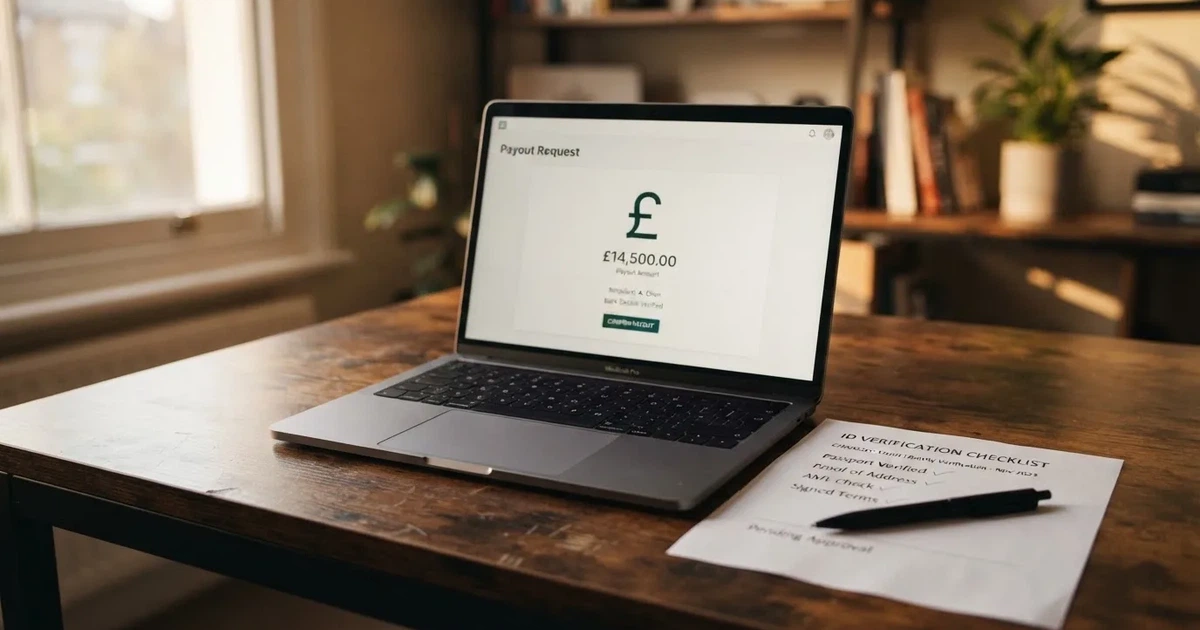
The premise is short and worth stating in plain words: a deposit made in Bitcoin moves value across a public blockchain instead of through a card network, but the casino accepting it in Great Britain still sits inside the same licensed, GAMSTOP-linked, identity-checked system as any other operator. The currency reaches the account differently; the rules the account runs under are the ones every British remote licence holder works to. That is the entire shape of this page, and the rest of it is the practical detail.
Table of Contents
- The blockchain, the bank and the licence
- The licence, the register and what it actually shows
- How a Bitcoin deposit actually behaves at a licensed British casino
- How the wagering cap and the bonus rules read in 2026
- The brand-by-brand comparison for Bitcoin deposits
- How to read the comparison table
- Where this leaves a player choosing between them
- What to check before depositing Bitcoin at any of these brands
- Frequently asked questions about Bitcoin at a UK casino
The blockchain, the bank and the licence
What Bitcoin actually does at the cashier
Bitcoin is the original cryptocurrency. Its genesis block was mined on 3 January 2009 by the pseudonymous Satoshi Nakamoto, whose real identity has never been verified; the white paper that set the design out had been published on 31 October 2008. The network validates transactions through proof-of-work hashing, brings a new block into existence roughly every ten minutes on average, caps the total supply at 21 million coins and halves the mining reward every 210,000 blocks. None of that makes a deposit any more or less legitimate for the casino cashier: what the cashier cares about is that value arrived, and Bitcoin’s ledger is open for anyone to read.

That is the entire reason a player reaches for it in the first place. A bank transfer carries the bank’s view of the customer on the way through; a card payment can be declined for reasons that have nothing to do with gambling; an e-wallet may take a working day or two to settle. Bitcoin settles when the network confirms the transaction, and the network does not know what the payment is for.
Why the licence is the answer to most of the legal questions
The legal question that draws the most searches around this subject — is a Bitcoin casino legal in the UK — collapses once the licence is on the table. Any operator taking customers based in Great Britain needs a Gambling Commission remote casino operating licence, and a Curaçao, Malta or Gibraltar licence does not stand in for one. The 2014 Act closed that route: location of incorporation is irrelevant if British customers are accepted.

A licence number on the public register follows a fixed form: a six-digit account number, the letter R for remote, a six-digit licence number and a two-digit suffix. So Ladbrokes’ licence reads 054743-R-330863-014 because LC International’s account is 54743 and the Commission assigned it a remote licence with the suffix 014. The structure is the same for every entry, and a player can copy any operator’s number into the register’s search box and confirm it for themselves.
Where the FCA sits on the currency itself
The Financial Conduct Authority became the anti-money-laundering supervisor of UK cryptoasset businesses on 10 January 2020, and any firm offering cryptoasset exchange or custodian wallet services to UK customers must register with it before starting business. Since that date the FCA has had 417 applications; 68 have been registered, 263 have been withdrawn. The point for a casino customer is narrower than it sounds: the FCA supervises the exchanges a player funds Bitcoin from, not the casino that receives it. The casino sits under the Commission.
HMRC’s treatment of Bitcoin is the other piece of the picture that affects a player directly. Bitcoin held by an individual is treated as property rather than currency, and Capital Gains Tax applies on disposal — selling it, swapping it for another token, spending it at a casino cashier, gifting it. Income Tax and National Insurance apply to Bitcoin received as employment income or as mining and staking rewards. A Bitcoin win at a licensed UK casino is not taxable to the player, because UK gambling winnings are not taxable to the player; the operator pays Remote Gaming Duty, which moved from 21% to 40% on 1 April 2026. Two separate tax events can sit on one deposit: spending Bitcoin at the cashier is a disposal for the player, and a win paid back into Bitcoin is the casino’s transaction, not a further disposal until the player disposes of it again.
The licence, the register and what it actually shows
What the public register carries on 18 September 2026
The Commission’s public register is the test of who is licensed and who is not, and on 18 September 2026 it listed 139 businesses holding an active remote casino operating licence. The register can be searched online and downloaded as a CSV or Excel file. A player does not need to take an operator’s word for its licence status; the answer is on the register, by account number, with a status of Active, Inactive or White Label.
The register also runs a separate domain list. Each website is logged against the licence account that operates it. On the same date that list held 1065 active domain entries and 361 white-label entries. A white-label site trades under another operator’s licence — the brand on the front is a marketing skin, the licence behind it belongs to someone else, and a dispute runs back to the licence holder, not the brand on the homepage. The status field matters because an Inactive entry is not the same as a revoked one; it usually means the domain is no longer being marketed, while the licence itself remains in force.
How a licence number is read
Every licence number on the register has the same shape: a six-digit account number, then -R-, then a six-digit licence number, then a two-digit suffix. The “R” is the marker that says remote — it is what distinguishes an online licence from a betting-shop or arcade licence held by the same business. The suffix increases when the licence is varied; a fresh licence carries 001, an extension carries 002, and so on.
Reading the table later in this page with that structure in mind makes it quick to spot a shared licence. Coral, Gala Bingo and Ladbrokes all sit under account 54743, LC International Limited, and all carry the same licence number 054743-R-330863-014 because the Commission records the licence against the account, not against the brand on the homepage. A licence shared across brands is normal in British online gambling and does not make the brands the same company at the customer-experience level; it does mean the same compliance team and the same dispute route.
Where this page’s featured brands sit on that register
Every brand in the comparison below carries a Commission remote licence, and the licence holder is named so a reader can search the register directly. Casumo trades under Recro Limited, account 61549, on licence 061549-R-336718-002. Betfair is operated by PPB Games Limited, account 39411, on 039411-R-319335-010. Coral, as already noted, sits under LC International Limited on 054743-R-330863-014. 888casino runs through 888 UK Limited on 039028-R-319297-014. Sky Vegas trades as Bonne Terre Gaming Limited on 065519-R-339675-002. kwiff is operated by Eaton Gate Gaming Limited on 044448-R-323408-017. Grosvenor Casinos trades under Rank Interactive (Gibraltar) Limited on 057924-R-334666-005 — a name that does not contradict the British licence, because the licence is what makes the activity legal in Great Britain, not where the parent company is incorporated. Jackpotjoy sits under Gamesys Operations Limited on 038905-R-319430-022. Gala Bingo shares LC International’s licence with Coral. bet365 trades under Hillside (UK Gaming) ENC on 055149-R-331499-004.
A reader who is unsure about a brand that is not on this list can take the same route: search the register by the brand name, read the licence number, and confirm the status before depositing.
How a Bitcoin deposit actually behaves at a licensed British casino
The cashier side of a crypto deposit
A licensed British casino that accepts Bitcoin runs a normal cashier and adds Bitcoin as a funding rail alongside cards, bank transfer and e-wallets. The mechanics on the casino’s side are different from a card payment in only one respect: the value arrives in Bitcoin rather than pounds, and the casino either converts it to pounds at the prevailing rate on receipt or credits the account in Bitcoin at a recorded rate. Either way the player balance is denominated in pounds for the purposes of staking, bonuses, withdrawals and the Commission’s stake caps.
That last point is the one that matters most for what the player actually experiences. The Commission’s online slot stake caps apply regardless of how the account was funded: £5 per game cycle for players aged 25 and over (from 9 April 2025), £2 per game cycle for players aged 18 to 24 (from 21 May 2025). A Bitcoin deposit does not raise the cap, and a Bitcoin-funded account is not exempt from auto-play being banned, from the 2.5-second minimum interval between spins, or from the ban on losses disguised as wins.
The identity check that runs before any play
Name, address and date of birth have been verified before a first deposit or any play at a licensed British site since 7 May 2019. Bitcoin does not change that. The Commission’s stance on crypto-funded play is that it is a high-risk indicator requiring enhanced customer due diligence, so a Bitcoin-funded account may attract more documentary checks than a card-funded one, not fewer. Anonymous play is not possible at a licensed site.
The implication is straightforward. The currency that arrives over a public blockchain is treated by the casino as a signal of elevated risk rather than as a signal of reduced risk, because the Commission has told them to treat it that way. A player choosing Bitcoin because they want to be left alone will find the opposite.
Limits, reality checks and the GAMSTOP line
The Commission’s player-protection regime applies uniformly. Operators must prompt a customer to set a financial limit before the first deposit, and that prompt ran from 31 October 2025. Auto-play is banned and a slot spin may not be faster than 2.5 seconds; losses disguised as wins are banned. Reality checks and time-outs are standard. GAMSTOP, the national online self-exclusion scheme, has been a mandatory condition of every online licence since 31 March 2020; exclusion periods are six months, one year or five years and cannot be cancelled early. A player who has registered with GAMSTOP cannot open an account at any GB-licensed operator, regardless of how they intend to fund it, and that includes any of the brands in the comparison below.
Financial vulnerability checks are another layer on top of GAMSTOP. They run at £150 net deposits in a rolling 30 days and use public data only, with the wider financial risk assessments announced but not yet in force. The check is on the deposit pattern, not on the deposit method; a Bitcoin-funded account that crosses the threshold in pounds-equivalent is treated like any other.
Why an offshore brand is not the route around any of this
Some searches in this pool ask for Bitcoin casinos not on GAMSTOP, as if a non-GAMSTOP option were the natural counterpart to a Bitcoin deposit. It is the opposite. Providing gambling to people in Great Britain without a Commission licence is an offence under section 33 of the Gambling Act 2005. The Commission disrupts illegal sites through cease-and-desist notices, search-engine delisting and referrals to payment and hosting providers, but has no ISP-blocking power. No penalty falls on the player — that is the point that gets repeated — but what the player loses on an unlicensed site is protection: no GAMSTOP, no Commission complaints route, no approved ADR.
A player who has self-excluded through GAMSTOP and is looking for a way around it is not looking for a Bitcoin casino. They are looking for an unlicensed site, and the costs of that route fall entirely on them.
How the wagering cap and the bonus rules read in 2026
The 10x wagering cap that took effect on 19 December 2025
Wagering requirements on bonuses at GB-licensed operators have been capped at 10x since 19 December 2025. Mixed-product bonuses — an offer that gives a casino bonus alongside a sports free bet, for example — are banned. The cap is on the multiplier applied to the bonus, the deposit, or the deposit plus bonus, depending on how the operator structures the offer. Credit cards have been banned for gambling since 14 April 2020, including credit cards routed through e-wallets, so any bonus that suggests using credit to chase a wagering requirement is one to walk away from on its own.
The arithmetic the cap produces
The cap is small enough that the arithmetic is worth doing openly. Take a bonus of £100. At the 10x cap, the player must turn over £1,000 before the bonus converts to withdrawable cash. At the maximum stake of £5 per spin for a player aged 25 or over, that is 200 spins; at the £2 cap for a player aged 18 to 24, it is 500 spins. A 2.5-second minimum spin interval puts the £100 bonus for an older player at around 8 minutes 20 seconds of pure spin time, and the £100 bonus for a younger player at around 20 minutes 50 seconds. None of those figures include time spent choosing a slot, time on reality-check pop-ups, or time the account sits idle.
A different bonus size produces a different band. A £50 bonus at 10x is £500 turnover, 100 spins for an older player and 250 for a younger one. A £200 bonus at 10x is £2,000 turnover, 400 spins and 1,000 spins respectively. The pattern is the same: the spin count rises with the bonus, and the £2 cap makes the youngest players’ workload roughly two-and-a-half times the older players’ for the same bonus.
The expected cost of clearing a bonus
The expected cost is what the bonus actually costs in statistical terms, before any single outcome. At a representative 96% return-to-player, £1,000 of turnover produces an expected loss of £40 over the clearing period. The bonus converted at the end of that period is worth £100 to the player only if the expected loss is less than the bonus — at this combination, £100 against £40, the offer is positive on its face. The 10x cap sits exactly where the Commission’s policy reasoning says it should: high enough that bonuses can still be positive on average, low enough that the cost of clearing them is contained.
The cap is doing its job when the arithmetic lands here and not on the player. The cap stops doing its job the moment a bonus is paired with a tight max-cashout limit, a short expiry, or a game-weighting table that excludes the slots the player actually wants to play. None of those are visible in the multiplier, and they are the conditions a player should read before claiming.
The Bitcoin angle on bonuses
There is no separate Bitcoin bonus regime at a licensed British casino. A Bitcoin-funded account is treated under the same bonus terms as any other funding method, including the 10x wagering cap and the ban on mixed-product offers. A casino marketing Bitcoin as a way to “unlock” bigger bonuses is one to read carefully, because the cap applies to the bonus on its own merits, not to the funding method.
The brand-by-brand comparison for Bitcoin deposits
Casumo
Casumo trades as Casumo under Recro Limited, on the Commission’s remote casino operating licence 061549-R-336718-002. The licence is active, the domain is logged as active, and the brand has been a familiar name on the British market for long enough that the register entry is one a player can find and confirm in a single search.
On Bitcoin support the public register and the licence entry carry nothing — the Commission’s record is about who is licensed, not which funding rails the cashier accepts. A player reading this page looking for the brand that goes furthest on crypto should treat that gap as a reason to check Casumo’s own cashier page rather than as evidence one way or the other. The verdict for a British player is that the licence is in order and the brand is established; the cashier page itself holds the final answer on support.
Betfair
Betfair sits under PPB Games Limited on 039411-R-319335-010, with betfair logged as active. PPB is the operating company for Betfair’s British casino product; the wider Betfair group has sports, exchange and international operations that sit outside this licence. For a player comparing brands, the relevant point is that the casino product they are using runs under a Commission licence and is bound by the Commission’s conditions.
The Bitcoin question follows the same shape as Casumo. The register entry is silent on funding rails. The brand is a known British operator with a long history. The brand’s cashier page provides the final confirmation on whether Bitcoin is supported.
Coral
Coral sits under LC International Limited on 054743-R-330863-014 — the same licence that covers Gala Bingo and Ladbrokes, all three sitting on account 54743. Coral’s own domain is coral.co.uk and is logged as active. For a player, the practical implication is that complaints and compliance run to the same place regardless of which of the three brands is on the front, even though the marketing is separate.
On Bitcoin support the register is silent. The brand is one of the longer-established British names. The verification that a player is making a Commission-licensed deposit applies as it does for every other brand in this comparison.
888casino
888casino trades under 888 UK Limited on 039028-R-319297-014, with the domain logged as active. 888 UK Limited is the British arm of the wider 888 group; the licence is the British one. A player comparing brands can take the licence number straight to the register.
The Bitcoin support question is open from the register’s perspective. The brand is established and the licence is current. What the cashier actually accepts is a question for the brand.
Sky Vegas
Sky Vegas sits under Bonne Terre Gaming Limited on 065519-R-339675-002, the British operating company for the Sky-branded casino product. The domain Sky Vegas is logged as active. Sky’s broader media presence does not change the licence picture: it is Bonne Terre Gaming Limited that holds it, and the Commission’s record is against that company.
On Bitcoin support the register is silent. The brand is familiar and the licence is current. The Bitcoin question is the same one for every brand on this page: the register tells the player who is licensed, not what the cashier accepts.
kwiff
kwiff trades as kwiff under Eaton Gate Gaming Limited on 044448-R-323408-017. The domain is logged as active. The brand has made itself known in the British market through its product positioning rather than through brand longevity, and the licence entry is what makes its product legal to offer to British customers.
Bitcoin support is not addressed in the register entry. A player reading the comparison should treat that as the same position as every other brand on the list, and check the cashier directly.
Grosvenor Casinos
Grosvenor Casinos sits under Rank Interactive (Gibraltar) Limited on 057924-R-334666-005, with Grosvenor Casinos logged as active. The licence holder is a Gibraltar-registered company, but the Commission licence is what allows it to take British customers — a point that comes up more often than it should, because a Gibraltar corporate registration is not the same as a Gibraltar gaming licence and is not a substitute for a Commission licence.
Bitcoin support is silent in the register. The brand is established through its high-street presence; the licence is current and is the only one a player needs to confirm.
Jackpotjoy
Jackpotjoy trades as Jackpotjoy under Gamesys Operations Limited on 038905-R-319430-022, with the domain logged as active. The licence is one of the longer-standing entries on the register because Gamesys has been on the British market for some time. For a player reading this comparison, the entry is a clean, current licence against a familiar British brand.
Bitcoin support is not addressed in the register entry. The brand is established and the licence is current. The cashier picture is a question for the brand.
Gala Bingo
Gala Bingo sits under LC International Limited on 054743-R-330863-014 — the same licence as Coral and Ladbrokes, on account 54743. Gala Bingo is logged as active. The shared licence is the relevant fact for the player: the brand sits behind the same compliance regime as its sister sites.
Bitcoin support is silent in the register entry. The brand’s product is bingo-led rather than casino-led in its positioning, and the licence is current. The Bitcoin question follows the same pattern as for the other LC International brands.
bet365
bet365 trades under Hillside (UK Gaming) ENC on 055149-R-331499-004, with bet365 logged as active. bet365 is one of the largest British-licensed operators and the licence entry is the longest-standing on this comparison. For a player the relevant point is that the casino product runs under the British licence and is bound by the Commission’s conditions.
Bitcoin support is not addressed in the register entry. The brand is established and the licence is current. The cashier question is the same one for every brand in this list.
How to read the comparison table
The table below carries the columns a player needs to make a like-for-like read of every featured brand: the licence holder and the GB remote casino licence number, the domain status on the register, and the position on Bitcoin support from the register’s perspective. The licence column pairs the operating company with the licence number so a reader can search the register directly. The domain status column shows whether the brand’s site is logged as Active, Inactive or White Label on 18 September 2026. The Bitcoin support column carries the article-language no-data marker because the Commission’s register is silent on funding rails for every featured brand — that is not a yes and not a no, it is a gap that the cashier, not the register, answers.
A reader who wants to know whether a brand takes Bitcoin should treat the register as confirming the licence and then move to the brand’s own cashier page for the funding-rail answer. The table is the verification step, not the answer.
| Brand | Licence holder and GB remote casino licence | Domain status on the register | Bitcoin support |
|---|---|---|---|
| Casumo | Recro Limited, 061549-R-336718-002 | Active | — |
| Betfair | PPB Games Limited, 039411-R-319335-010 | Active | — |
| Coral | LC International Limited, 054743-R-330863-014 | Active | — |
| 888casino | 888 UK Limited, 039028-R-319297-014 | Active | — |
| Sky Vegas | Bonne Terre Gaming Limited, 065519-R-339675-002 | Active | — |
| kwiff | Eaton Gate Gaming Limited, 044448-R-323408-017 | Active | — |
| Grosvenor Casinos | Rank Interactive (Gibraltar) Limited, 057924-R-334666-005 | Active | — |
| Jackpotjoy | Gamesys Operations Limited, 038905-R-319430-022 | Active | — |
| Gala Bingo | LC International Limited, 054743-R-330863-014 | Active | — |
| bet365 | Hillside (UK Gaming) ENC, 055149-R-331499-004 | Active | — |
Where this leaves a player choosing between them
A player with a hard preference for Bitcoin funding has already narrowed the field to the brands whose cashier actually accepts it, and that information is not on the Commission’s register. Once that filter is applied, the choice between the brands on this list comes down to game catalogue, customer support, withdrawal pattern and the experience of the cashier itself, not to the licence — they all hold a Commission licence, they all run GAMSTOP, they all apply the £5/£2 stake cap, they all require identity verification before the first deposit.
A player who is open on funding rail but cares about the Commission’s protection regime has a wider set, and the comparison is on game catalogue and customer experience rather than on Bitcoin specifically. The Bitcoin-funded option is one rail among several, and the Commission’s regime treats it as a higher-risk indicator for anti-money-laundering purposes rather than as a fast track or a workaround.
A player who has registered with GAMSTOP and is looking for a way around the exclusion does not have a brand problem; they have a regulatory problem. No licensed British casino, Bitcoin or otherwise, opens an account for a self-excluded player. An unlicensed site that does is offering an unregulated product, and the Commission’s protection regime does not reach it.
What to check before depositing Bitcoin at any of these brands
Five checks, in order, before a first Bitcoin deposit at any brand in the comparison:
- Confirm the licence. Take the licence number into the Commission’s public register and confirm the status is Active for the brand and the domain. The register entry is the test, not the brand’s own homepage.
- Confirm GAMSTOP. A player who has self-excluded through GAMSTOP will not be able to open an account, regardless of how they intend to fund it. The check is on the player, not the brand.
- Confirm the cashier. The Commission’s register does not record which funding rails a cashier accepts. The Bitcoin rail question is answered by the brand’s cashier page, in its own terms.
- Confirm the limits. The £5 / £2 stake cap applies at every GB-licensed operator. A player aged 18 to 24 should expect the £2 cap. The financial-limit prompt runs before the first deposit.
- Confirm the bonus terms if claiming one. The 10x wagering cap is the Commission’s ceiling. Tight max-cashout limits, short expiries and restrictive game weighting are the conditions that erode a bonus below the cap.
Frequently asked questions about Bitcoin at a UK casino
Is it legal for a licensed UK casino to accept Bitcoin?
Yes, provided the operator holds a Gambling Commission remote casino operating licence. The Commission’s position is that crypto-funded play is a high-risk indicator requiring enhanced customer due diligence, which is the opposite of an exemption. The legal basis is the Gambling Act 2005 plus the Gambling (Licensing and Advertising) Act 2014, and the licence is the test.
Is there a minimum deposit when paying with Bitcoin?
The Commission’s regime does not set a minimum deposit; operators set their own. A Bitcoin minimum will normally be expressed in pounds-equivalent and will often sit higher than a card minimum because of the cost of processing the Bitcoin leg. The exact figure is on the cashier page of the brand in question.
How long does a Bitcoin deposit take to show up in my account?
Bitcoin blocks are produced roughly every ten minutes on average, and a deposit typically needs one to three confirmations before the cashier credits it. That puts the typical arrival time somewhere between ten minutes and an hour, against near-instant for cards and one to two working days for bank transfer. Speed depends on the cashier’s confirmation policy rather than on Bitcoin itself.
Do I need to verify my identity before depositing with Bitcoin?
Yes. Name, address and date of birth have been verified before the first deposit or any play at a GB-licensed operator since 7 May 2019. The Commission’s stance is that crypto-funded play triggers enhanced customer due diligence, so a Bitcoin deposit may attract more documentation, not less.
Does GAMSTOP self-exclusion cover an account funded with Bitcoin?
Yes. GAMSTOP has been a mandatory condition of every online licence since 31 March 2020, and a player who has self-excluded cannot open an account at any GB-licensed operator regardless of funding method. Exclusion periods are six months, one year or five years and cannot be cancelled early.
Are there any fees for depositing with Bitcoin?
Bitcoin’s network charges a mining fee that varies with congestion, and the casino’s cashier may add its own conversion or processing fee. The Commission’s regime does not cap these fees. A player should read the cashier’s fee schedule before funding, because the network fee alone can move sharply on a busy day.
Created by the ”cryptocasinoguideuk” editorial team.